Lichens often go unnoticed living on the ground on tree trunks or on rocks. Lichens And Air Pollution.

Indikator Pencemaran Lingkungan Ppt Video Online Download
There are a few different ways to use lichens like this as air quality detectors.

. Lichens can act as signals that it may be a little safer to breath the air. Using the LIS score an indication of air quality at a given site can be determined from the graph provided in the lichen guide. Therefore research related to the pollution based on lichen as an indicators being used widely.
- Lichens are very sensitive to sulphur dioxide pollution in the air. One is to determine the biodiversity of lichens of an area. Lichen which consists of a symbiotic relationship between a fungus and an alga is sensitive to atmospheric pollution including nitrogen and sulfur emissions that lead to acid rain as well as toxic lead and mercury emissions.
Lichens contribute significantly to the biodiversity and functioning of many ecosystems. Because of the quick response time to air pollutants lichen bioindicators can be used as a preliminary indicator of declining qualities in the environment specifically air quality. Epiphytic lichens can be used in different ways as air-quality bioindicators.
In the initial phase of investigation of damage around a source of pollution lichens can assist in the assessment of the type of air pollution involved. Theyre hearty but remarkably sensitive to air pollution. However rainwater can also contain pollutants such as dissolved sulphur dioxide which if absorbed can damage the lichen and prevent it from growing.
To grow lichens get their nutrients from the air. There are different levels of lichen tolerance to the pollution and lichen biodiversity decreases as air pollution levels rise. Lichens are found in both nature and in human-made environments including rocks trees barren earth metal and concrete.
These fungi reproduce asexually by production of conidia and chlamydospores and in wild habitats by ascospores. In polluted areas or in areas where pollution has increased the population of lichens of certain species will decrease while those of others increase because these can tolerate more pollution. Lichens have been used since the last century as indicators of air quality.
If change of substrate of the lichens as well as their general appearance is interpreted correctly a good picture of the air pollution situation is already available. Lichen relies on nutrients that it absorbs from rainwater to survive. Because lichens have no roots or protective surface they cannot filter what they absorb so whatever is in the air is taken straight inside.
Such studies can use lichens to map pollutant deposition or describe pollution gradients in relation to sources some examples of such studies include. This sensitivity makes lichen a valuable biological indicator of air quality. Many lichens show varying degrees of sensitivity to man-made pollutants such as sulphur dioxide.
Also because the presence or absence of certain lichen species is easily recorded and has in some cases been recorded at different times in. Given these facts about lichens and considering that they can be found in almost every part of the world it is no wonder that they are used as indicators for various types of pollution. Lichens can be used as air pollution indicators especially of the concentration of sulphur dioxide in the atmosphere.
Of air pollution on lichen chemistry and on lichen communities can be monitored to determine depositional patterns from sources. Some of the major pollutants that harm lichens are sulphur dioxide sulphuric and nitric acids fluorides ozone hydrocarbons and metals such as copper lead and zinc British Lichen Society 2006. Early floras and the journals of.
A lichen indicator score LIS is first calculated using the presence or absence of N-sensitive and N-tolerant lichen species on either trunks or branches of oak or birch at any given location. Lichens as Sensors for Air Pollution. This makes lichen a natural indicator of air pollution as it will only grow well in areas of clean air.
Instead they receive all their nutrients from the atmosphere. Lichens are well known as sensitive indicators of air pollution particularly for sulfur dioxide. The first group of methods are floristic based mainly on lichen-specific sensitivity to gaseous pollutants especially SO 2 fluorides and strongly oxidizing compounds such as ozone.
This is because there were certain characteristics on lichens that make them an excellent bioindicators for determining the presence of the primary pollutants such as sulphur dioxide SO2 nitrogen dioxide NO2 fluoride acid precipitation ozone and metals Hutchinson et al. The fungus provides shelter for the algae and the algae provides food for the fungi. When the air quality is lowered due to pollutants the entire associated ecosystem can become ecologically stressed and may lead to ecosystem death.
In particular the two pollutants that mostly affect lichens are nitrogen N and. If there are pollutants it can accumulate in the lichen and can become toxic very quickly. Lichens are organisms that grow in exposed places such as rocks or tree bark.
Trichoderma species are widely used in agriculture and industry as biopesticides and sources of enzymes respectively. If air is very badly polluted with sulphur dioxide there may be no lichens present just green algae may be found. Trichoderma species are Read More.
The algae in lichens photosynthesize create food from sunlight energy and both the algae and fungus absorb water minerals and pollutants from the air through rain and dust. So botanists can use lichen species as air quality indicators. They are sensitive to air pollution because they receive all nutrients from the atmosphere which makes them valuable as indicator species.
Evidence supporting this assertion goes back well over 100 years and is based on extensive field and laboratory studies. Museum lichenologist Gothamie Weerakoon says that lichens make great air pollution indicators. In part this is related to their unique biology.
Some sensitive lichen species develop structural changes in response to air pollution including reduced photosynthesis and bleaching. Lichens do not have roots. Lichens are sensitive to atmospheric pollution such as nitrogen N because they receive all their nutrients and water.
They are a symbiotic relationship between algae and fungi. Their use as an air quality meter was first discovered when they disappeared from the trees of England after the Industrial Revolution which caused increased acidity in rain. Since industrialisation many lichen species have become extinct in large areas - Lichens are widely used as environmental indicators or bio-indicators.
Scientists have learned to use this variability as an indicator of the air quality of any given site. The nineteenth-century observers simply noted a decline in the abundance and luxuriance of epiphytic lichens as towns were approached. The recent concern with all forms of pollution has stimulated research into the use of lichens as indicators of air pollution and there is now a large literature on the subject.
Lichens As Pollution Indicators Teaching Resources
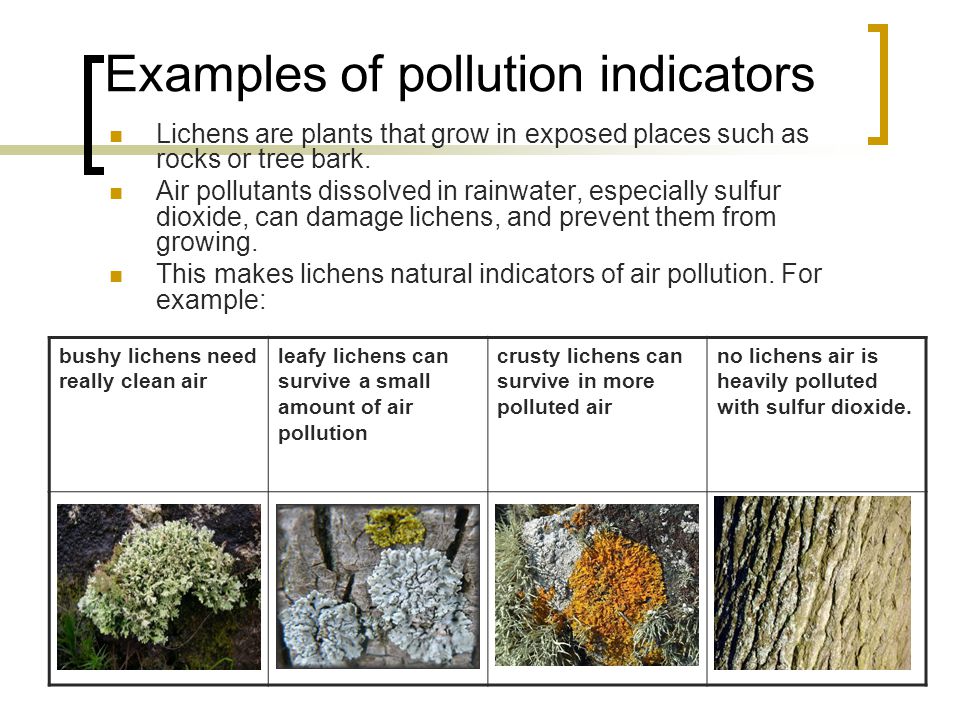
Walt Explain How We Can Use Organisms To Monitor Pollution Levels Pollution Indicators Ppt Download
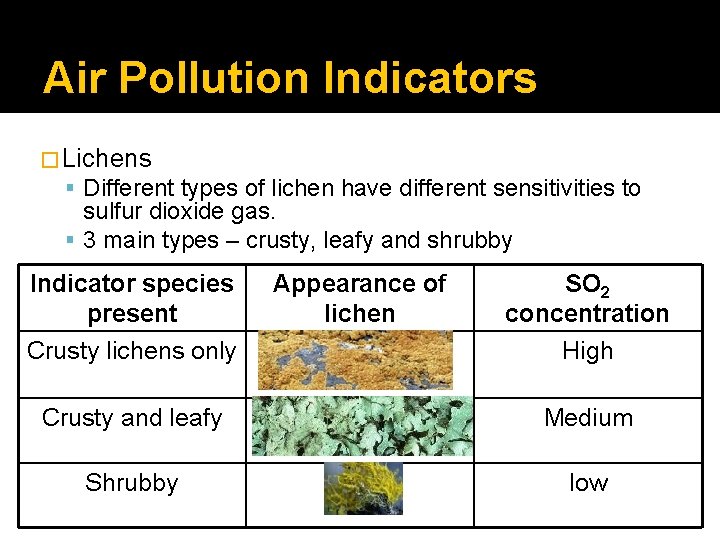
Adaptations Interdependence And Adaptation Summary Of Specification Adaptations

Insights Learning I Learning Test 20 31 December 2017 14 January 2018 Insightsias



0 Comments